
how safeguarding training helps keep students safe
regular training helps us keep up to date
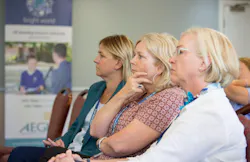
Safeguarding is an important responsibility for everyone involved in supporting our students. All Bright World staff, host families and drivers receive safeguarding training when they join us, followed by regular update sessions delivered by Adam Lubbock at Kings River Education and AEGIS, our accrediting body. These sessions help us stay up to date with safeguarding developments, promote our students’ wellbeing and respond appropriately to any concerns.
Each year, our Bright World Company Conference also provides an opportunity for the company to come together, refresh our knowledge and discuss real-life safeguarding case studies from the year.
Our host families have access to an online portal containing a bespoke recorded safeguarding training programme, also designed by Kings River Education. This means that the adults supporting our students in their homes have access to clear guidance on safeguarding, and can revisit their training whenever they need to.
Meanwhile, our Head Office team members complete Safer Recruitment Training and our Designated Safeguarding Leads receive additional training every two years. We review our Safeguarding and Child Protection Policies together at least once a year to make sure our procedures remain up to date.
Regular training is an important part of our commitment to keeping students safe. Safeguarding guidance and best practice are updated frequently, and ongoing training gives us the opportunity to refresh what we have learnt, consider new risks and make sure everyone knows how to respond appropriately if they have concerns about a child in our care.
what does safeguarding training teach us?
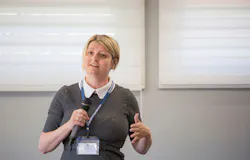
Safeguarding training helps us understand what constitutes abuse and neglect, and how to recognise signs that something may not be right. It gives our teams practical examples of behaviours and situations to look out for, helping them feel confident about raising concerns when something doesn't seem right.
It is important to remember that no child or young person is immune from safeguarding risks. For international students, this can be amplified by the distance from parents and usual support networks. They may find it difficult to talk about something that is worrying them or be unsure who to turn to.
As children spend more and more of their lives online, they are also more exposed. Our training helps our staff and host families understand these risks, recognise when a student may need support and give them the tools to help.
spotting that something is wrong
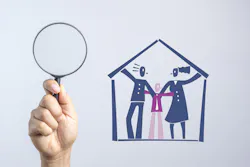
A child or young person who is experiencing abuse or another safeguarding concern may not always feel able to tell someone. They may feel embarrassed or worried about what has happened, they may have been told not to speak about it, or they may simply be afraid that nobody will believe them.
Safeguarding training helps us understand that a student may show that something is wrong through changes in their behaviour or appearance, even when they don't talk about what they are experiencing. They may become more withdrawn or quiet when they would normally be confident and outgoing, stop taking care of themselves, or experience a significant change in their eating habits or weight.
Our students are supported by a network of adults in different settings, including their school, Guardianship Care Manger, local Bright World Buddy and host family. Having people who see a student in different environments can be valuable, as each person may notice different changes or behaviours. A concern noticed by a host family or Bright World Buddy can be an important piece of a bigger picture, and they know how to raise concerns with Bright World so that they can be considered and shared with the student's parents and school. This helps ensure that concerns are not overlooked and that the right people can work together to support the student.
Safer Recruitment Training: choosing the right people

Safeguarding isn't only about recognising concerns when they arise. It also means doing all you can to prevent harm coming to children by taking steps to reduce risks from the outset, and making sure that the people who support our students are suitable for their role.
Our host families, drivers and Local Coordinators all have contact with Bright World students, so careful recruitment and appropriate safeguarding checks are an important part of our responsibilities. Safer Recruitment Training helps our team understand how to recruit responsibly, what questions to ask and what potential concerns to consider when selecting staff, volunteers and host families.
The training also allows us to learn from real-life case studies and understand how recruitment processes can fail, helping us continually review and improve our own approach.
Safeguarding laws and guidance are regularly updated, so refresher training is important too. Keeping our knowledge up to date helps us make sure that our recruitment practices continue to reflect current safeguarding expectations and good practice.
safeguarding training for our host families and drivers
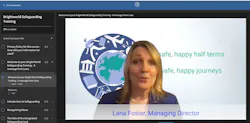
Our host families and drivers are an important part of the network of adults supporting Bright World students. Because they spend time with students outside of school, it is important that they understand safeguarding and know what to do if they notice something that concerns them.
We have seen first-hand how valuable this awareness can be. On one occasion, a host family noticed a significant change in a student's appearance and eating habits, and became concerned about her wellbeing. They knew that this was something they should raise with Bright World, allowing us to work with the student's school and mother to make sure she received the appropriate support.
The student was able to continue attending school while receiving specialist support and staying with her mother who temporarily moved to the UK to be with her. In time, she was ready to return to full boarding and complete her education.
The host family's role was not to diagnose the problem or provide specialist support. Their role was simply to notice that something had changed, take their concern seriously, and know who to contact. This is exactly why safeguarding training is so important: it helps the adults around our students recognise when something may not be right and gives them the confidence to raise a concern so that the appropriate people can take action.
professional curiosity

Professional curiosity is a safeguarding approach that encourages us not to simply take a situation or explanation at face value when something doesn't seem right. In practice, it means being willing to ask appropriate questions, listen carefully and look a little further when we have concerns about a student's wellbeing or circumstances.
The term is increasingly recognised within UK safeguarding guidance, including Keeping Children Safe in Education (KCSIE), which we refer to as part of our safeguarding practice.
For Bright World, professional curiosity means making sure our students are listened to, and that concerns are not simply overlooked or dismissed. Our team is encouraged to consider whether there may be more to a situation than first appears, while always responding appropriately and respecting the student's individual circumstances.
I have been having regular safeguarding training for more than 15 years and I can wholeheartedly say that I learn something new every time I have a training update. It is so important for all staff and volunteers at Bright World to understand the principals of safeguarding. It is also very important to understand our Child Protection policy and process and what to do in an emergency or if they have concerns.